
A vortex tube refrigeration system is a compressed air–driven cooling device that produces cold and hot air streams without refrigerants, compressors, or moving parts, making it highly reliable and low-maintenance. Widely used in industrial applications such as electrical enclosures, CNC machining, and food processing, it delivers instant cooling while offering energy-efficient, compact, and durable solutions for demanding environments.
A vortex tube refrigeration system is a compressed air–driven cooling device that separates a single stream of compressed air into two temperature streams: one hot and one cold. It operates without refrigerants, compressors, or moving mechanical components.
Also known as a Ranque-Hilsch vortex tube, this device is widely used in industrial environments where spot cooling, enclosure cooling, and process temperature control are required without traditional refrigeration infrastructure.
Unlike conventional refrigeration systems that rely on vapor-compression cycles, a vortex tube refrigeration system uses only compressed air and internal vortex dynamics to create temperature differentials.
Inside the tube:
This process is based purely on fluid dynamics and thermodynamics — no chemicals, no phase changes, and no mechanical refrigeration cycle.
| Component | Function |
|---|---|
|
Vortex Generator |
Creates high-speed rotational airflow |
|
Hot End Control Valve |
Regulates temperature and airflow split |
|
Cold Air Outlet |
Delivers chilled air to application |
|
Hot Air Exhaust |
Releases heated air |
|
Compressed Air Inlet |
Supplies system energy source |
| Parameter | Typical Range |
|---|---|
|
Inlet Air Pressure |
80–120 PSI |
|
Cold Air Temperature Drop |
Up to -50°F (-45°C) from inlet temp |
|
Cooling Capacity |
100–2500 BTU/hr |
|
Cold Fraction Adjustment |
10% – 70% |
|
Noise Level (without muffler) |
75–95 dB |
No Moving Parts
Minimal maintenance and long operational life.
No Refrigerants
No Freon, no environmental compliance issues.
Compact & Lightweight
Ideal for tight industrial spaces.
Instant Cooling
Produces cold air immediately upon activation.
Low Maintenance
No compressors or pumps to service.
A vortex tube refrigeration system is commonly used in:
In environments where moisture, oil, or vibration makes traditional refrigeration impractical, vortex technology provides a durable alternative.
| Feature | Vortex Tube System | Traditional Refrigeration | |
|---|---|---|---|
|
Moving Parts |
None |
Multiple (compressor, fan) |
|
|
Refrigerant Required |
No |
Yes |
|
|
Installation Complexity |
Simple |
Moderate to Complex |
|
|
Maintenance |
Minimal |
Regular servicing required |
|
|
Initial Cost |
Low |
Higher |
|
|
Operating Cost |
Depends on compressed air cost |
Depends on electricity consumption |
|
For optimal operation, consider:
Inadequate compressed air preparation can significantly reduce cooling efficiency.
Although vortex tubes eliminate refrigerants and mechanical systems, they rely on compressed air — which is energy-intensive to produce. Therefore:
Proper system design ensures operational efficiency.
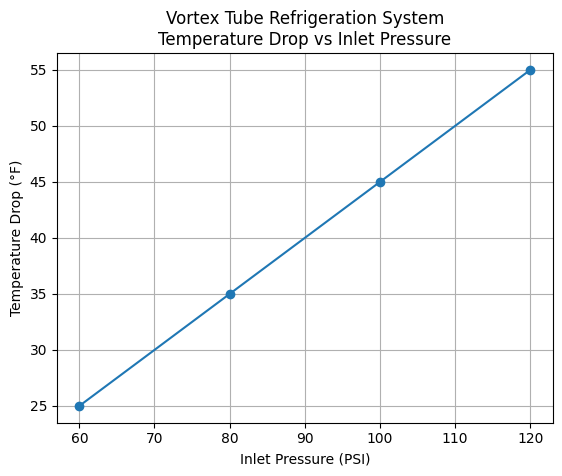
When choosing a system, evaluate:
For high-demand industrial environments, stainless steel vortex tubes are often preferred for durability and corrosion resistance.
A vortex tube refrigeration system is frequently integrated into:
When used with enclosure cooling kits, it prevents overheating, protects sensitive electronics, and extends equipment lifespan.
Because vortex tubes have no moving parts, maintenance typically includes:
Service intervals depend primarily on air quality conditions.
The technology is particularly valuable in industries where contamination control is critical.
The combination of mechanical simplicity, reliability, instant cooling response, and compact form factor makes vortex tube refrigeration systems ideal for modern industrial operations.
For industrial cooling solutions and vortex tube systems engineered for demanding environments, visit: https://supremeairproducts.com